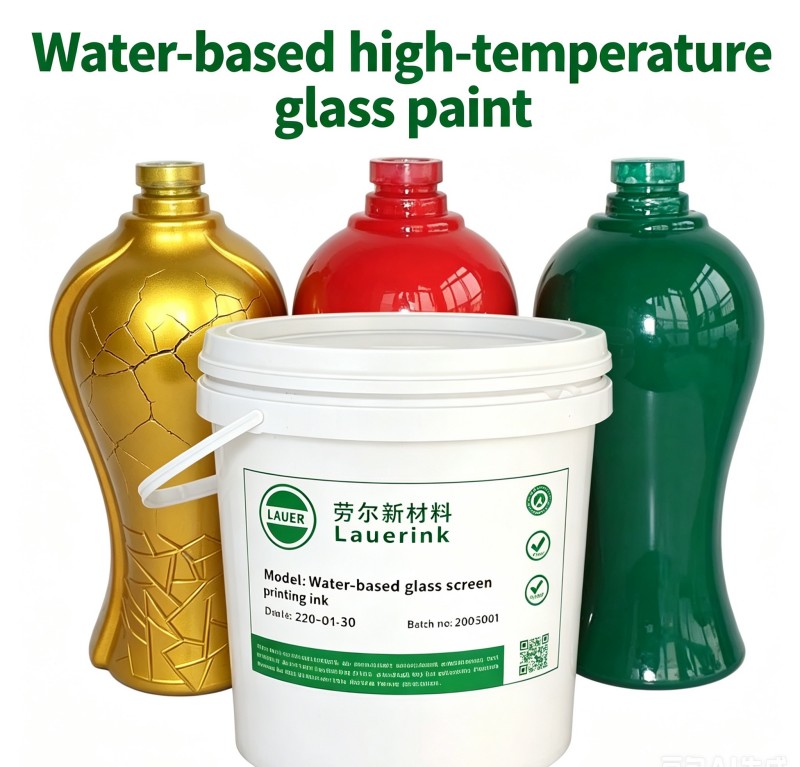
Water-Based High-Temperature Glass Paint
Water Based Ink
-
+86 18022025378 WhatsApp
-
Yan@lauerink.com Email
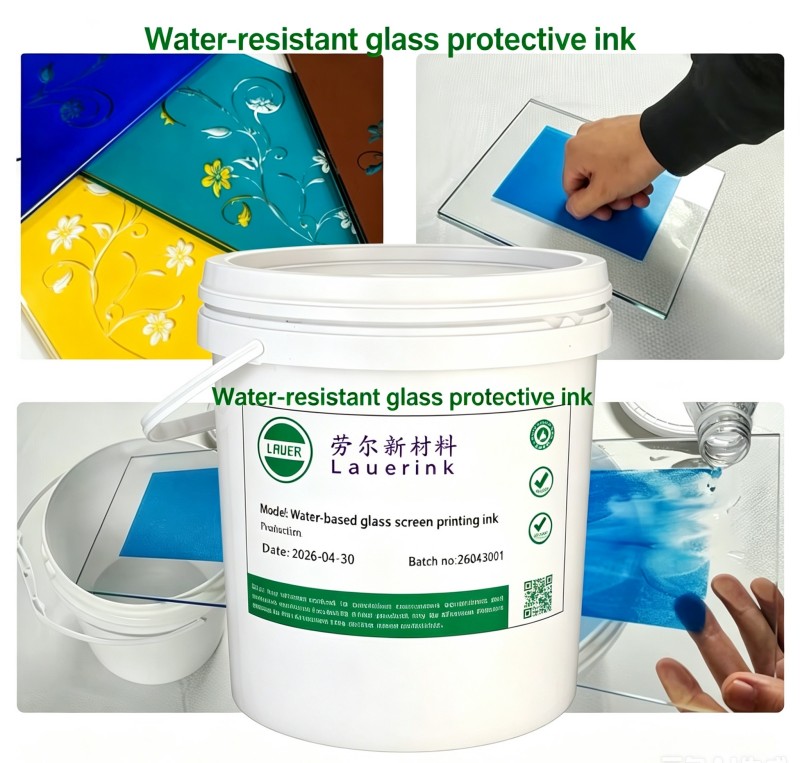
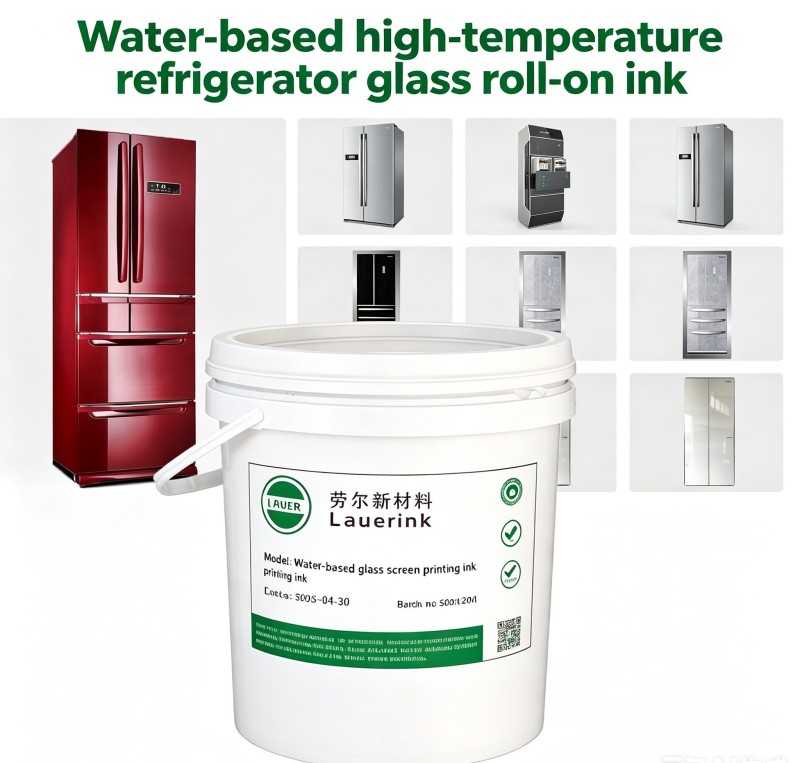
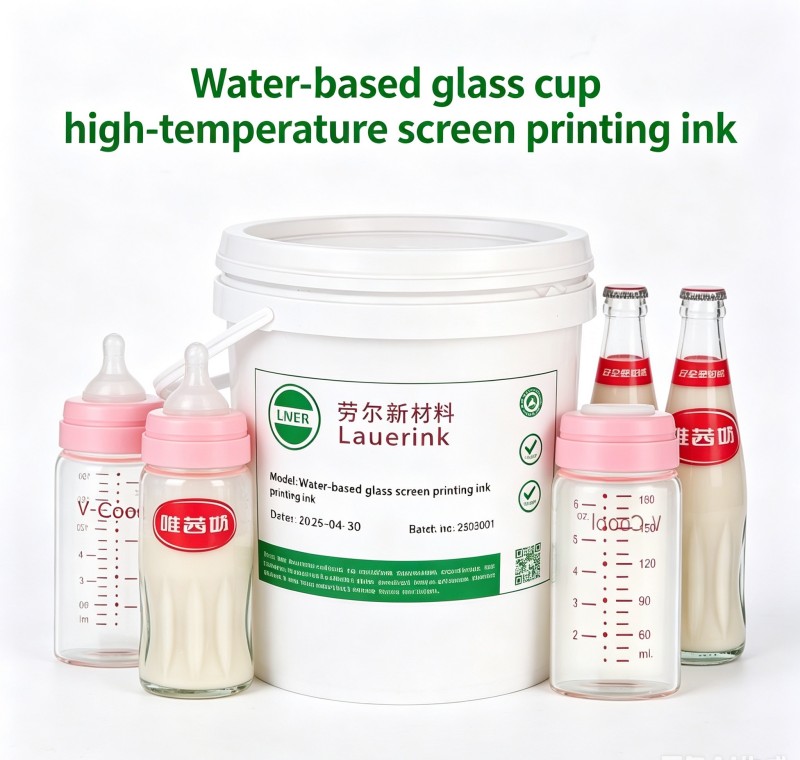
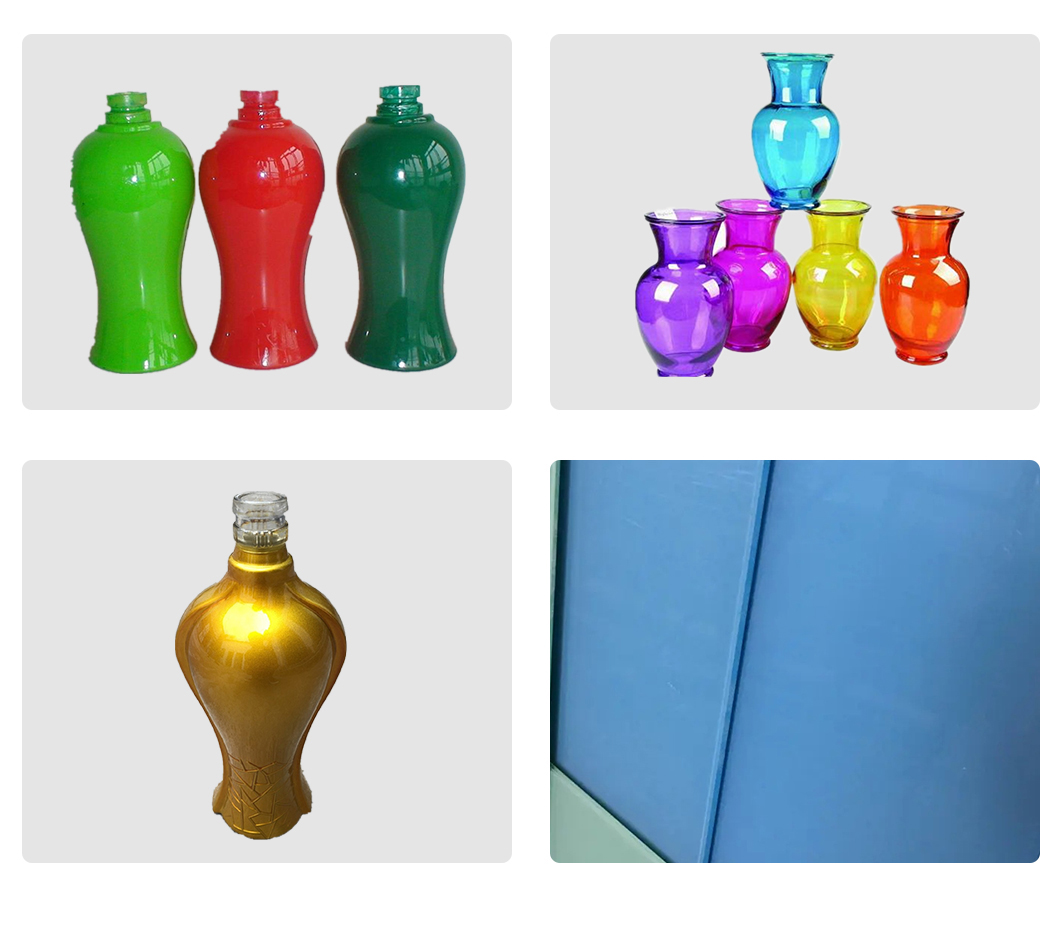
The system consists of a water-based carrier (evaporating during the drying stage) + inorganic glass powder + high-temperature inorganic pigments. Application methods include screen printing, spraying, and roller coating. After printing/spraying, it undergoes low-temperature pre-drying to remove moisture and organic carriers, followed by sintering in a 630–720℃ high-temperature tunnel furnace/tempering furnace. The glass powder melts and undergoes fusion chemical bonding with the glass substrate, forming an integrated inorganic glaze layer that permanently adheres to the glass surface.
The product contains no toluene, xylene, or ester organic solvents, and has extremely low VOCs. The screen, spray gun, and workbench can be cleaned with just water. The lead-free and cadmium-free formula meets RoHS and LFGB food contact standards and can be used in conjunction with glass tempering processes. It is a perfect replacement for traditional oil-based high-temperature glass inks, solving industry pain points such as high pollution, high cleaning costs, and high pressure on exhaust gas treatment caused by oil-based inks. It is suitable for high-temperature sintering applications such as building curtain walls, tempered glass for home appliances, high borosilicate glassware, and automotive glass.
Why can it conquer designers and engineers at the same time?
1.Safety standard of "breathing level" for Ink For Glass Wall Panels Interior.
In view of the enclosed space such as atrium of shopping mall and hotel partition, zero formaldehyde is released after high temperature sintering. The actual measurement of a five-star hotel in Shanghai shows that the TVOC content of the 12-meter-high glass curtain wall printed with this product is always lower than 0.02 mg/m in a closed exhibition hall with a constant temperature of 28℃, which is three times stricter than the national standard for children's rooms.
2."Armor coating" under extreme temperature difference.
As a real High Temperature Glass Ink, its temperature resistance span reaches -50℃ to 300℃—— The actual measurement of the glass covered bridge in the Northeast Ice and Snow World: When boiling water is poured at MINUS 40℃, the colored glaze coating has no cracks; The flame performance curtain wall in mall of the emirates has not faded for three years in the face of instantaneous 150℃ heat wave impact.
3."Green Magic" to Revive Recycled Glass.
Different from the traditional recycling of broken glass contaminated by ink, this Eco Friendly Printing Ink will decompose into silica particles on its own during sintering. German environmental protection agency confirmed that the difference of light transmittance of new glass products is less than 0.3% after the broken glass doped with this coating is remelted, and the zero pollution closed loop from painting to recycling is truly realized.
Cross-border application record
Commercial space: UV-proof glazed curtain wall of museum, oil-resistant partition glass of hot pot restaurant.
Home innovation: kitchen explosion-proof glass printing, bathroom antibacterial coating privacy glass
Industrial design: guide glass in dust-free workshop, acid and alkali resistant observation window in laboratory.
Black technology hidden in microstructure
Using the patent of bionic cobweb structure-when sintered at high temperature, nano-zinc oxide will form a three-dimensional mesh scaffold, which not only endows Ink For Glass Wall Panels Interior with hardness beyond ceramics (pencil hardness reaches 9H), but also maintains 15% flexibility. This makes it a perfect solution to the deformation problem of large-plate glass curtain wall. The curvature error of a 6m×3m curved glass painting in an art museum in Beijing is only 0.08mm after installation.




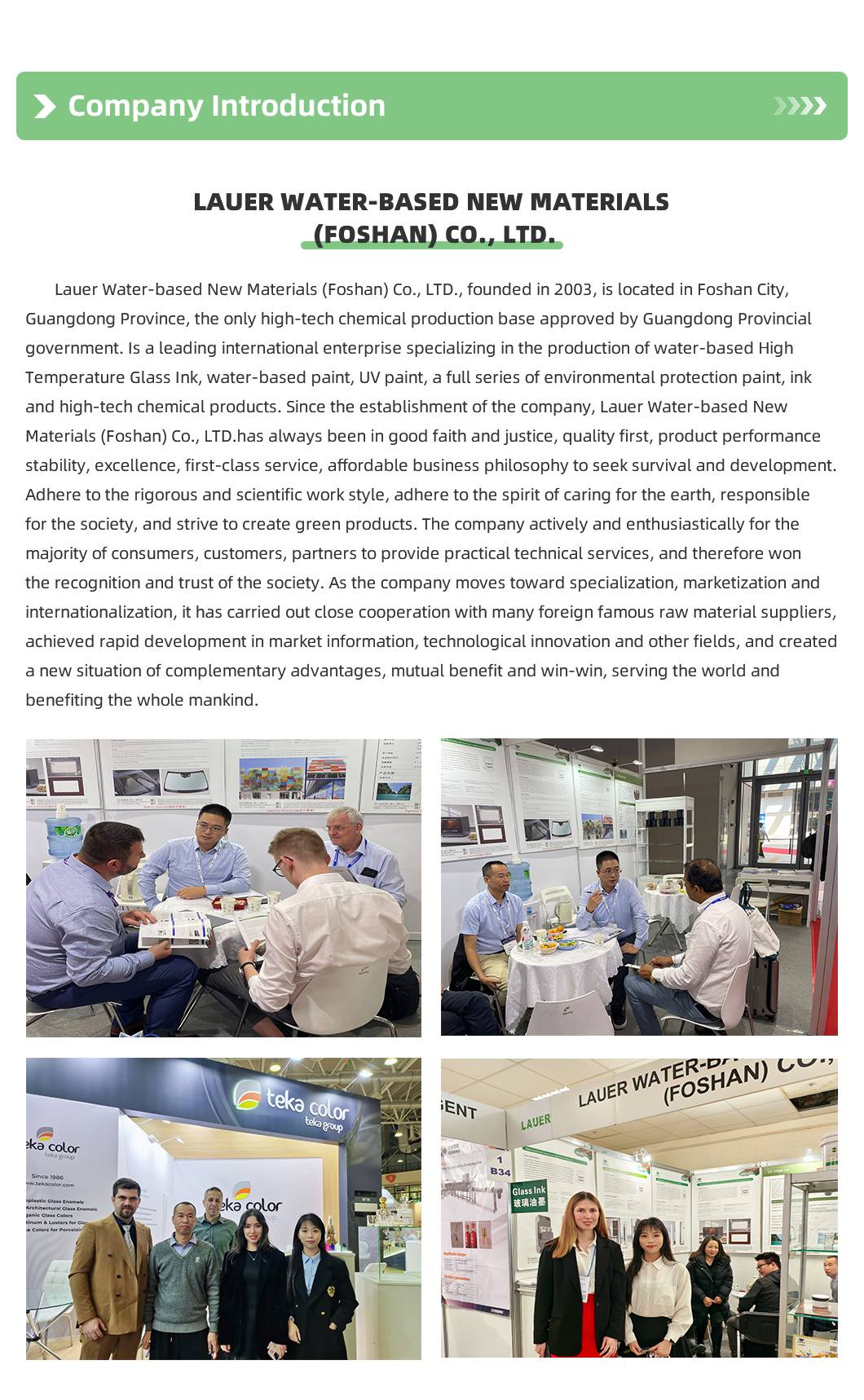
A partner built on chemistry expertise, environmental commitment, and lasting customer relationships.