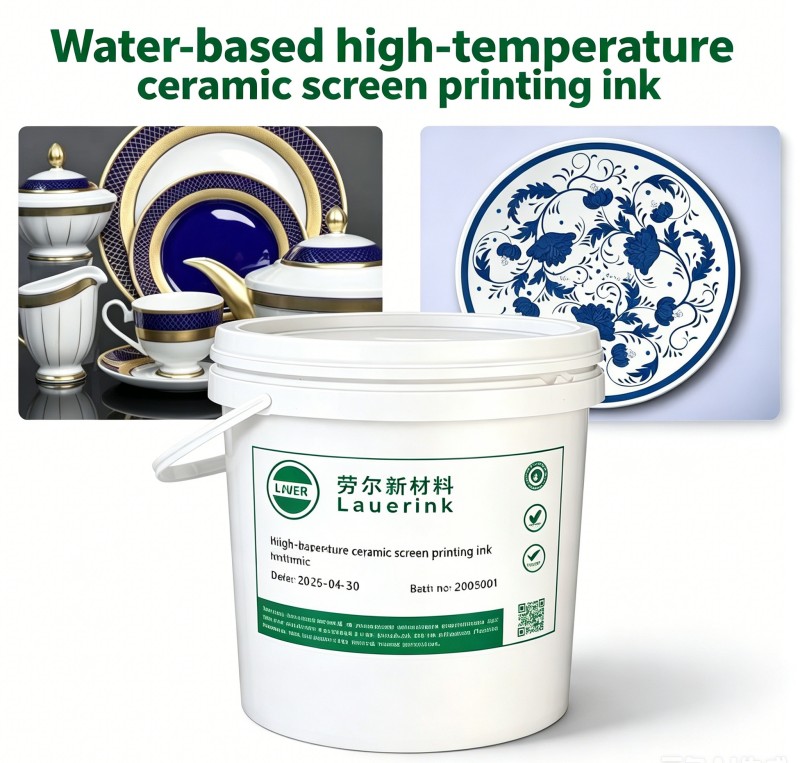
Water-Based High-Temperature Ceramic Ink
Water Based Ink
-
+86 18022025378 WhatsApp
-
Yan@lauerink.com Email
I. Product Definition
Water-based high-temperature ceramic screen printing ink is a water-based, environmentally friendly inorganic sintered screen printing ink. It uses deionized water as the dispersion medium and is formulated with a water-based polymer carrier, high-temperature inorganic pigments, low-temperature frit, and environmentally friendly functional additives. It is specifically designed for ceramic screen printing. After low-temperature pre-drying, it is sintered at a corresponding kiln temperature. The organic carrier is completely decomposed without residual carbon, and the inorganic pigments fuse with the ceramic glaze/body to form a permanent, non-detachable decorative layer. It is an environmentally friendly upgrade and replacement for traditional oil-based ceramic inks.It is an ideal alternative to traditional solvent-based blending agents, capable of meeting the production needs of various high-temperature ceramic inks, and is widely used in ceramic decoration, tile manufacturing, art ceramics and other fields.
2. Product Features and Advantages
Superior Printability: This product boasts excellent rheological properties, ensuring smooth printing without clogging the screen and enabling continuous screen printing with jagged edges. Its high load-bearing capacity imparts excellent wettability to powdered materials, resulting in a smooth and glossy printed surface. This product is compatible with various screen types, ensuring smooth ink flow through the screen.
Environmentally Friendly and High-Temperature Performance: As a truly green product, our water-based mixing medium contains low levels of organic components, reducing VOC emissions into the atmosphere by over 90%. After high-temperature sintering, it leaves minimal ash and carbon residue, preventing white ink from turning black and having minimal impact on glaze color.
Stability and Durability: Performs excellently even in humid environments, with no bubble formation and good leveling properties. The screen exhibits excellent washability, making operation more convenient. Thanks to its excellent weather resistance, printed ceramic products maintain long-lasting color stability.
Advanced hydrophilic modification technology: Utilizing a special polymer hydrophilic modifier, a 6-8 nm adsorption layer is formed on the pigment particle surface, generating a steric hindrance effect and imparting excellent dispersion stability to the ink. The absolute value of the zeta potential can reach above -50 mV, ensuring the system remains stable during long-term storage without precipitation or re-coarsening.
Technical Specifications
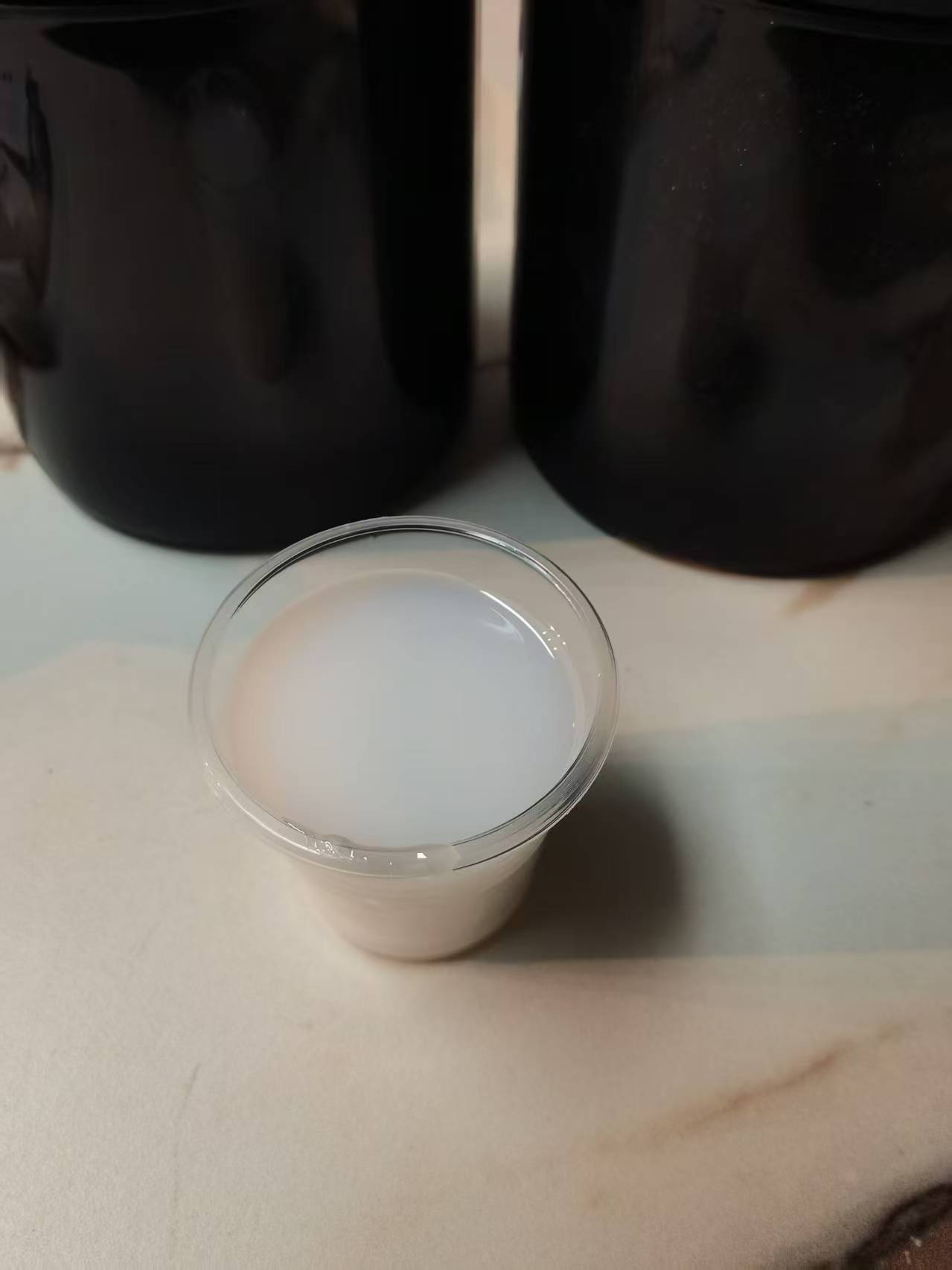
Appearance: Transparent and colorless
Shelf life: 12 months from the date of production, at room temperature
Operating environment: Humidity 55-65% / Temperature 23-35℃
Surface tension: <35 mN/m
Viscosity range: 10-20 mPa·s (25℃)
Applications
Multiple ceramic decoration uses: Suitable for decorative printing on ceramic transfer paper, glazed tiles, art ceramics, and various other ceramic products. Multiple application methods including spraying, printing, and hand-painting are available.
Success Stories
Case Study 1: Solution to Printing Challenges for a High-End Glazed Tile Manufacturer
A well-known domestic architectural ceramics company had long suffered from defects in screen printing under high humidity conditions during the summer, such as bubbles, poor leveling, and jagged edges when using traditional blending agents. After replacing their production line, the company switched to our company's water-based ceramic ink blending agent, which fully utilized its excellent moisture resistance (remaining stable at 65% humidity) and superior leveling performance, completely solving the aforementioned problems. Furthermore, this blending agent improved the screen cleaning performance, reducing screen printing machine downtime for cleaning by approximately 30%, significantly improving production efficiency, and ensuring a smooth, glossy, and high-quality product surface.
Case Study 2: Green Transformation and Efficiency Improvement for a Handmade Ceramic Factory
A ceramics factory in Chaozhou, Guangdong, focusing on the export market, decided to replace all its water-based ceramic ink production lines with our blending media to meet the stringent environmental standards of international customers. Our blending media has a low odor and is more environmentally friendly, significantly improving the workshop environment. Its "non-serrated continuous printing" and "anti-clogging" characteristics enable workers to continuously print over 5000 patterns when using high-mesh screen printing for complex designs. The precision and consistency of the patterns have earned high praise from customers and helped the factory successfully obtain multiple international environmental certifications.
Case Study 3: Ceramic Decal Paper Manufacturer Improves Sintering Quality and Efficiency
A large ceramic decal paper manufacturer previously encountered problems with slight blackening of white ink and insufficient surface gloss after sintering when using other water-based binders. After adopting our product, the uniformity of pigment dispersion was significantly improved due to its "high loading capacity" and "excellent wetting properties." More importantly, the characteristic of "white ink not blackening after sintering" ensures the purity and brightness of the pattern colors, especially for white areas. The sintered glaze is bright and smooth, and the first-grade yield increased by 15%, bringing direct economic benefits to the customer.
Usage Recommendations
For users of screen printing mesh and screen printing machines, it is recommended to adjust the mixing ratio according to printing speed and environmental conditions. In high humidity environments, increase the proportion of the mixture to improve leveling; in dry environments, decrease the proportion of the mixture to prevent cracking. When using a screen printing machine, it is recommended to adjust the squeegee pressure and angle according to the mesh count of the screen fabric, generally maintaining a 75-degree angle as the optimal angle.
Screen Printing Process Optimization: Providing professional solutions for screen printing stencils with different mesh counts:
Low Mesh Count (50-120): Recommended material-to-ink ratio of 1:0.3, suitable for patterns with high enamel content and high coverage requirements.
Medium Mesh Count (120-230): Recommended material-to-ink ratio of 1:0.4 to balance printability and detail.
High Mesh Count (230+): Recommended material-to-ink ratio of 1:0.5 to ensure perfect reproduction of fine lines and intricate patterns.


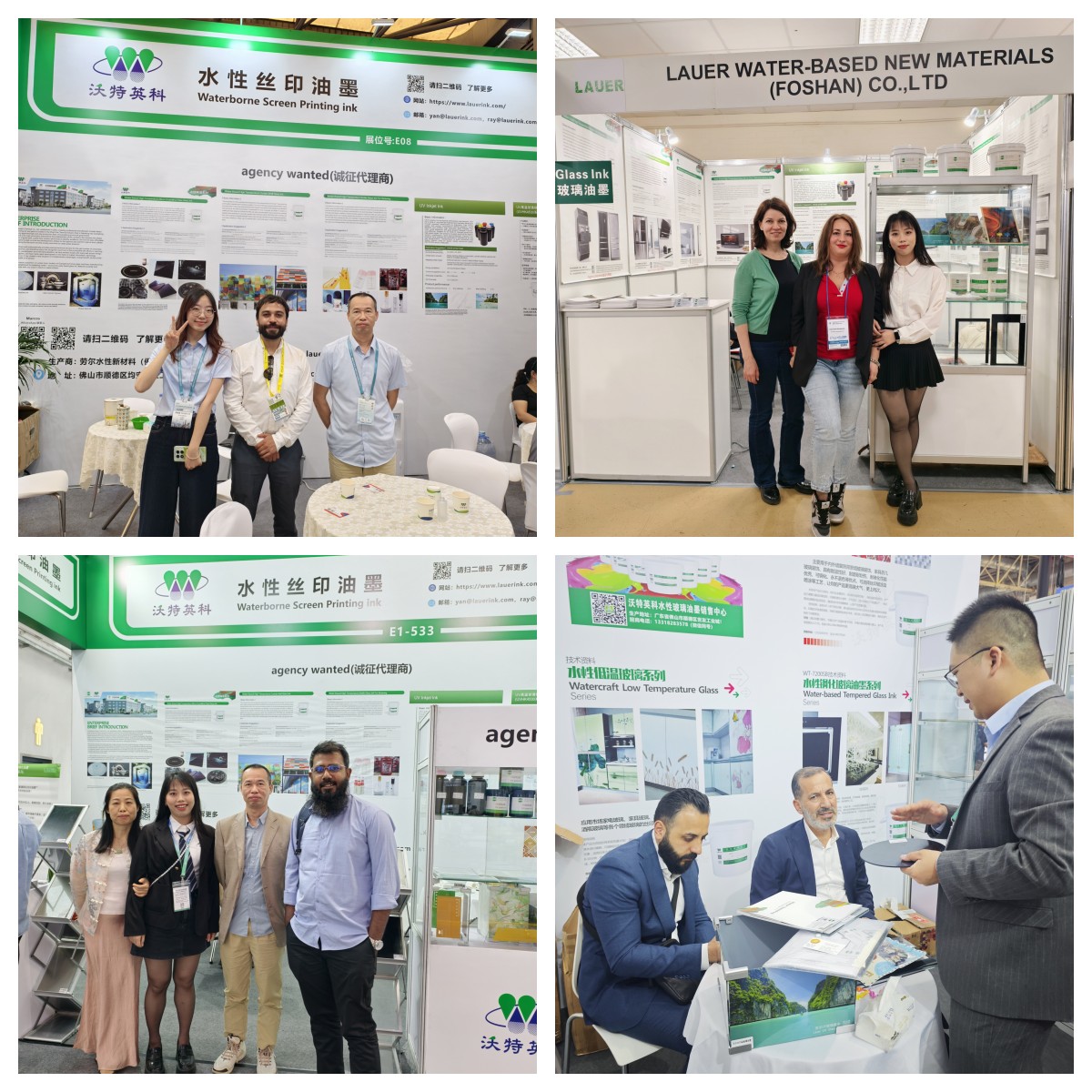
A partner built on chemistry expertise, environmental commitment, and lasting customer relationships.